Customer Complaint Investigation
Scientific Investigation of Customer-Reported Product Problems
A customer complaint often begins with an observation rather than a scientific diagnosis..
The customer may report:
- Unexpected odor
- Discoloration
- Foreign material
- Particles
- Residue or deposits
- Product spoilage
- Separation
- Texture or consistency changes
- Packaging problems
- Surface defects
- Coating failure
- Corrosion
- Premature degradation
- Reduced performance
- Unexpected microbial growth
- Other product differences
The immediate quality question may be:
Is the complaint sample actually different from an acceptable product?
If it is, the next questions become:
What changed?
What scientific evidence can help explain the difference?
CMDC Labs supports appropriate customer complaint investigations using comparative
product characterization, analytical chemistry, microbiology, materials and surface
characterization, unknown-material analysis, contamination investigation, and scientific
troubleshooting.
CMDC Labs is
accredited under


Start With the Complaint Sample
The complaint itself provides important context.
Useful questions may include:
- What did the customer observe?
- When was the problem noticed?
- Is the complaint sample available?
- Is the original packaging available?
- Is a retained sample available?
- Are other products from the same lot available?
- Have similar complaints occurred?
- Is the complaint associated with one batch?
- How was the product stored?
- How was it used?
- Was the package opened or damaged?
- What testing has already been performed?
The objective is to translate the reported symptom into a scientifically testable question.
Complaint Sample vs. Retained Sample
One of the Most Useful Comparative Approaches
Where available, a retained or reference product can provide critical context.
A basic comparison may involve:
Customer Complaint Sample
vs.
Retained Sample From the Same Lot
The investigation can ask:
- Are the samples measurably different?
- Is the reported defect detectable?
- Is contamination present?
- Has chemical degradation occurred?
- Is an unknown material present?
- Are microbiological characteristics different?
- Did the packaging or product surface change?
A retained sample can help distinguish a product-wide issue from a change that may have
occurred after distribution.

Complaint Sample vs. Other Product Lots
Additional comparisons may include:
Complaint Sample
vs.
Same-Lot Retained Sample
vs.
Different Acceptable Lot
This can help determine whether a particular characteristic is:
- Unique to the complaint sample
- Associated with the entire batch
- Present across normal products
- Associated with broader product variation
The appropriate comparison depends on the complaint and available samples.
Characterize the Reported Failure
Trends May Be More Informative Than a Single Number
Customer descriptions are valuable, but laboratory investigation should convert the complaint
into measurable observations.
For example:
“The product changed color.”
may lead to:
chemical + material + degradation comparison
“There is something floating in it.”
may lead to:
particle isolation + microscopy + material characterization
“It smells strange.”
may lead to:
chemical and/or microbiological investigation
“The coating is coming off.”
may lead to:
surface + coating + material investigation
“The product spoiled early.”
may lead to:
microbiology + chemistry + ingredient + manufacturing + packaging investigation

Visual & Physical Documentation
Before destructive testing, useful observations may include:
- Photographs
- Appearance
- Color
- Particle location
- Surface condition
- Packaging condition
- Deposits
- Separation
- Visible growth
- Other physical differences
These observations can help determine which regions or materials deserve additional analysis.

Foreign Material Complaints
What Is the Particle, Fiber, Flake or Residue?
Foreign-material complaints may involve:
- Particles
- Fibers
- Films
- Flakes
- Residues
- Deposits
- Powders
- Other unknown materials
The investigation may first ask:
What is the material?
Then:
Does it resemble a potential source?
Potential comparisons may involve:
Complaint Material
vs.
Packaging
Complaint Material
vs.
Equipment Material
Complaint Material
vs.
Raw Material
Complaint Material
vs.
Environmental Material

Microscopy & Imaging
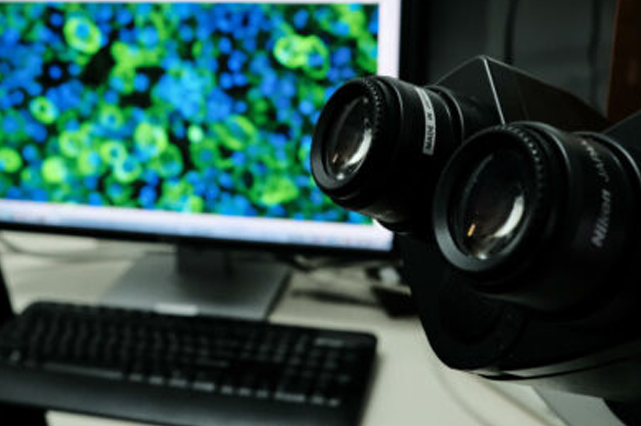
Microscopy may help examine complaint materials involving:
- Particles
- Fibers
- Surface defects
- Coating fragments
- Deposits
- Product morphology
- Other visible differences
Imaging can help document the material and guide subsequent analytical work.
FTIR, Raman & SEM
Depending on the sample, complaint-material characterization may use appropriate techniques
such as:
FTIR
For suitable polymers, organic residues, coatings, films, and materials.
Raman Spectroscopy
For complementary molecular characterization of appropriate particles and materials.
SEM
For higher-resolution examination of appropriate particles, surfaces, deposits, or defects.
The technique should be selected according to the actual complaint material.
Unexpected Odor Complaints
An unexpected odor may be associated with:
- Chemical change
- Volatile compounds
- Product degradation
- Microbial activity
- Packaging interaction
- Contamination
- Ingredients
A useful comparison may involve:
Complaint Product
vs.
Retained / Acceptable Product
Depending on the product and suspected mechanism, GC or GC-MS may be useful for
appropriate volatile or semi-volatile chemical investigations.
Microbiological testing may also be relevant where spoilage is suspected.
Discoloration Complaints
Discoloration may result from many different mechanisms, including:
- Chemical degradation
- Ingredient differences
- Oxidation or other chemical change
- Material interaction
- Packaging
- Contamination
- Storage
- Environmental exposure
Comparative testing should focus on determining what differs between the discolored and
acceptable product before assuming the cause.
Product Spoilage Complaints
Complaints involving:
- Odor
- Visible growth
- Product deterioration
- Texture changes
- Separation
- Reduced shelf life
may require a combined investigation involving:
- Ingredients
- Water
- Manufacturing
- Packaging
- Storage

Microbiological Complaint Investigation
Where microbial contamination is suspected, investigation may include:
- Microbial enumeration
- Microbial identification where appropriate
- Complaint-product testing
- Retained-product testing
- Ingredient testing
- Water testing
- Environmental or manufacturing samples
The broader question may become:
Is the microorganism limited to the complaint sample, or is there evidence of it elsewhere
in the product or process?

Chemical Complaint Investigation
Analytical chemistry may help compare complaint and reference products for:
- Known compounds
- Unexpected peaks
- Degradation
- Contaminants
- Residues
- Volatile compounds
- Other chemical differences
Depending on the product and scientific question, appropriate methods may include HPLC,
GC/GC-MS, spectroscopy, elemental analysis, or other techniques.

Unknown Compounds in Complaint Samples
A complaint sample may contain an unexpected analytical signal that is absent from the
retained product.
For example:
Complaint Sample
→ Unexpected peak present
Retained Sample
→ Peak absent
This can become an important clue.
Where identifying or investigating that chemical becomes the central question:

Packaging-Related Complaints
The package should be considered where complaints involve:
- Leakage
- Product discoloration
- Residues
- Particles
- Material deterioration
- Odor
- Product degradation
- Premature spoilage
- Surface changes
Useful comparisons may include:
Complaint Product + Complaint Packaging
vs.
Retained Product + Unused Packaging
Where packaging itself becomes the primary suspected contributor:

Coating & Surface Complaints
Complaints involving:
- Peeling
- Flaking
- Delamination
- Surface discoloration
- Corrosion
- Residues
- Surface deterioration
may require characterization of both the failed surface and an acceptable reference.

Ingredient-Related Complaints
A complaint trend may begin after changes in:
- Ingredient supplier
- Ingredient lot
- Formulation
- Raw material
- Ingredient storage
A broader investigation may compare:
Complaint / Problematic Product
vs.
Acceptable Product
alongside:
Current Ingredient
vs.
Historical Ingredient

Manufacturing-Related Complaints
Customer complaints may reveal problems associated with:
- Processing
- Equipment
- Cleaning
- Water
- Raw materials
- Hold times
- Production scale
- Packaging
- Other manufacturing variables
If complaints cluster around a particular manufacturing period or batch, process history may
become especially important.
Contamination Investigation
When a complaint confirms contamination, the investigation may expand beyond the complaint
sample.
Potential sources may include:
- Raw materials
- Ingredients
- Water
- Manufacturing
- Equipment
- Packaging
- Environment
- Handling
The scientific question then becomes:
Where could the contaminant have originated?

Distribution, Storage & Customer Environment
Not every complaint necessarily originates during manufacturing.
Relevant post-production variables may include:
- Temperature
- Humidity
- Storage duration
- Transportation
- Package damage
- Environmental exposure
- Product handling
- Use conditions
Comparison with retained products can help determine whether the complaint sample changed
after leaving controlled manufacturing or storage conditions.
Shelf-Life Complaints
A product may perform correctly initially but fail before its expected shelf life.
Complaints may involve:
- Spoilage
- Degradation
- Odor
- Discoloration
- Separation
- Loss of performance
Where premature aging or storage failure becomes the central problem:
Complaint Trends Across Multiple Samples
Multiple Complaints Can Reveal a Pattern
Where several complaint samples are available, comparison may help determine:
- Whether all complaints represent the same failure
- Whether different failure mechanisms are present
- Whether complaints cluster by batch
- Whether they cluster by packaging lot
- Whether the same contaminant appears repeatedly
- Whether severity varies systematically
For example:
Complaint A
Complaint B
Complaint C
vs.
Retained / Reference Product
A recurring analytical feature may provide an important clue for broader root-cause
investigation.
Complaint Sample Handling Matters
The history of the complaint sample should be documented where possible.
Useful information may include:
- When the package was opened
- How the product was used
- Storage conditions
- Whether the sample was transferred to another container
- Whether the original package is available
- Shipping conditions
- Time between complaint and laboratory receipt
This information can help interpret laboratory findings appropriately.
Failure Reproduction Studies
Once a complaint failure has been characterized, controlled studies may help test suspected
mechanisms.
For example:
Complaint Product
→ specific discoloration + analytical difference
↓
Suspect elevated storage temperature
↓
Expose acceptable product under controlled conditions
↓
Characterize exposed product
↓
Compare With Complaint Sample
Root Cause Analysis for Customer Complaints
A complaint investigation may progress through:
Customer Reports Problem
↓
Document Complaint & Sample History
↓
Compare Complaint Sample With Retained / Reference Product
↓
Characterize Relevant Differences
↓
Review Batch / Manufacturing / Ingredient / Packaging / Storage History
↓
Develop Potential Failure Mechanisms
↓
Perform Targeted Follow-Up Testing
↓
Reproduce Suspected Mechanisms Where Appropriate
↓
Evaluate Evidence
A Laboratory Finding Is Not Automatically the Root Cause
This distinction should remain clear.
For example, laboratory testing may establish:
A microorganism is present in the complaint sample.
That does not automatically establish:
where the organism entered the product.
Likewise:
A particle resembles packaging material.
does not necessarily prove:
how or when the particle entered the product.
Laboratory findings provide scientific evidence that should be evaluated together with
manufacturing, distribution, product-use, quality, and other relevant information.
Quality & CAPA Support
Customer complaints frequently connect directly with quality systems.
Laboratory evidence may support:
- Complaint investigations
- Nonconformance investigations
- CAPA
- Supplier investigations
- Manufacturing investigations
- Batch investigations
- Product-failure investigations
Testing may help document:
- Whether the complaint sample differs
- What type of failure occurred
- Whether contamination is present
- Whether an unknown material can be characterized
- Whether analytical differences correspond with suspected variables
Final complaint disposition, root-cause determination, CAPA decisions, and regulatory conclusions remain with the client organization.
Complaint Investigation vs. Routine Product Testing
The distinction should remain clear.
Routine Product Testing
Answers a defined question:
Does this product meet the requested specification or test requirement?
Customer Complaint Investigation
Answers a troubleshooting question:
A customer reported something unexpected—can we scientifically characterize the complaint and determine how the sample differs from an appropriate reference?
The complaint investigation may use many routine laboratory capabilities without replacing those service pages.
Laboratory Capabilities for Customer Complaint Investigation
A complaint investigation may draw upon several CMDC Labs scientific areas.
Product Characterization
For comparing complaint, retained, historical, and reference products.
Analytical Chemistry
For chemical differences, degradation, residues, contaminants, and unknown signals.
Microbiology
For microbial contamination, spoilage, enumeration, and identification.
Materials Characterization
For particles, polymers, packaging materials, coatings, and other physical materials.
Surface Characterization
For coatings, deposits, corrosion, contamination, and surface defects.
Microscopy & Imaging
For particles, fibers, defects, morphology, and visible complaint materials.
Scientific Troubleshooting
For integrating laboratory results with batch, manufacturing, ingredient, packaging, storage, and
complaint history.
A Typical Customer Complaint Investigation Pathway
A project may progress through:
Customer Complaint Received
↓
Document Reported Failure
↓
Obtain Complaint Sample & Original Packaging Where Available
↓
Select Retained / Reference Product
↓
Document Physical Differences
↓
Perform Targeted Characterization
↓
Compare Complaint & Reference Samples
↓
Identify Meaningful Scientific Differences
↓
Review Batch / Manufacturing / Packaging / Ingredient / Storage History
↓
Develop Potential Explanations
↓
Perform Targeted Follow-Up or Reproduction Studies
↓
Support Complaint / Root Cause / CAPA Decisions
The exact pathway depends on the complaint and available samples.
What Information Should You Provide?
Useful information may include:
- Complaint description
- Customer observations
- Photographs
- Product name or type
- Batch or lot
- Manufacturing date
- Complaint sample
- Original packaging
- Retained sample
- Acceptable reference product
- Other complaint samples
- Storage information
- Transportation information
- Product-use history
- Manufacturing history
- Ingredient or supplier changes
- Packaging changes
- Existing analytical results
- Previous complaints
- The decision the investigation must support
You do not need to determine the analytical techniques before contacting CMDC Labs.
Have a Customer Complaint Sample to Investigate?
Tell us:
- What did the customer report?
- What does the complaint sample look like?
- Is the original packaging available?
- Is a retained sample available?
- Are other products from the same lot available?
- Have similar complaints occurred?
- Did ingredients, manufacturing, packaging, or suppliers change?
- What testing has already been performed?
- What decision must the investigation support?
CMDC Labs can evaluate the available samples and determine which comparative and banalytical approaches may be appropriate.
Already Know What Testing You Need?
If the complaint has already been characterized and you know the analyte, microorganism, material, analytical technique, or test requirement, proceed directly to the appropriate laboratory service.
From Customer Observation to Scientific Evidence
Customer complaints may connect:
complaint sample + retained product + chemistry + microbiology + materials + packaging + manufacturing + storage + product history.
CMDC Labs’ Scientific Troubleshooting approach helps organizations move from:
customer reports a problem → characterize the complaint → compare with retained/reference product → identify measurable differences → investigate potential mechanisms → generate evidence → support better-informed quality decisions.