Biotechnology Solutions
Laboratory Testing, Research & Scientific Development Support for Biotechnology Companies
Biotechnology projects frequently cross traditional scientific boundaries.
A pharmaceutical project may begin with a clearly defined testing requirement—or with a much
broader question:
.
A single program may involve
cells, microorganisms, biomaterials, analytical chemistry,
molecular methods, product characterization, experimental assay development,
manufacturing questions, and regulatory considerations.
As technologies evolve, the scientific question may not fit neatly within a standard laboratory
test.
Whether the project begins with a new technology, an experimental product, an unexpected
result, or a defined testing requirement, the first step is understanding what scientific information
is needed.
CMDC Labs is
accredited under
Scientific Support Across Biotechnology Development
Biotechnology programs can evolve rapidly from early research into product-development,
characterization, verification, and commercialization activities.
CMDC Labs can evaluate appropriate projects involving:
- Early-stage research
- Proof-of-concept studies
- Technology evaluation
- Cell culture
- Cell-based assays
- Mammalian-cell testing
- Microbiology
- Biological-response testing
- Molecular approaches where confirmed
- Product characterization
- Analytical chemistry
- Materials characterization
- Method development
- Scientific troubleshooting
- Product development
- Verification and validation support
- Quality and regulatory considerations
Rather than forcing every project into a predefined testing package, the scientific approach can be developed around the technology and the question being investigated.
Biotechnology Research & Development
Scientific Resources for Emerging Technologies
Biotechnology research often requires experimental flexibility.
New technologies may not yet have established testing methods, reference products, standard
protocols, or clearly defined performance criteria.
CMDC Labs can evaluate R&D projects involving:
- Applied research
- Proof-of-concept studies
- Feasibility studies
- Comparative research
- Technology evaluation
- Experimental methods
- Customized testing
- Cell-based research
- Microbiological research
- Materials and surface investigations
- Analytical characterization
- Multidisciplinary scientific studies
Research programs can draw upon multiple laboratory capabilities where appropriate.

Cell Culture Capabilities
Cell culture can provide an experimental platform for investigating how materials, products,
compounds, surfaces, or technologies interact with biological systems.
Depending on the scientific objective, cell-culture projects may support:
- Product research
- Materials evaluation
- Comparative studies
- Biological-response investigation
- Assay development
- Technology evaluation
- Product development
- Experimental research
The appropriate cell model and experimental design should be selected according to the
scientific question.
Cell-Based Assays
Measure Biological Responses Relevant to the Research
Question
Cell-based assays can help biotechnology researchers investigate measurable biological
responses under controlled experimental conditions.
Projects may involve:
- Comparative cellular response
- Cytocompatibility
- Product or material evaluation
- Experimental treatments
- Surface interactions
- Biological activity
- Assay development
- Research applications
The assay should be selected or developed based on the response being investigated rather
than applying a standard assay indiscriminately.

Biological Response Testing
Biotechnology products and experimental technologies may interact with biological systems in
complex ways.
CMDC Labs can evaluate appropriate biological-response projects involving:
- Mammalian cells
- Cytocompatibility
- Immune-response investigation
- Antimicrobial technologies
- Bioactive surfaces
- Comparative biological studies
- Experimental materials
- Product-development research
Where appropriate, biological data can be considered alongside chemical, materials,
microbiological, or surface-characterization data.
Molecular Biology Capabilities
Some biotechnology projects may require molecular approaches to investigate biological
systems, microorganisms, or experimental technologies.
Where confirmed and appropriate, CMDC Labs’ molecular capabilities may support projects
involving:
- PCR-based analysis
- Experimental research
- Biological characterization
- Microbiological investigation
- Comparative studies
- Method development
- Research and development
The required method depends on the target, sample type, scientific objective, and intended use
of the data.

PCR Analysis & Testing
Build a Scientific Profile of the Product
PCR can provide a targeted molecular approach for appropriate biotechnology and
microbiological questions.
Potential applications may involve:
- Targeted biological analysis
- Microorganism-related research
- Comparative studies
- Research applications
- Method development
- Experimental investigations
Specific PCR capabilities and project suitability should be confirmed during project qualification.

Microbiology for Biotechnology
Microorganisms may be central to the biotechnology itself—or may represent an unwanted
source of contamination.
CMDC Labs can support appropriate projects involving:
- Microbial identification
- Microbial enumeration
- Contamination investigation
- Environmental monitoring
- Antimicrobial research
- Product microbiology
- Experimental microbial studies
The role of microbiology within the project should be determined by the technology and the
scientific objective.
Analytical Chemistry for Biotechnology
Characterize Products, Materials & Experimental Systems
Biotechnology programs may require analytical information concerning:
- Product composition
- Raw materials
- Chemical characteristics
- Contaminants
- Comparative samples
- Experimental formulations
- Manufacturing changes
- Product consistency
Relevant analytical approaches may include chromatography, spectroscopy, elemental analysis,
and other appropriate techniques.
Biotechnology Product Characterization
Characterization helps establish a better scientific understanding of a technology or product
before later development decisions are made.
Depending on the project, characterization may involve:
- Chemical properties
- Biological response
- Materials
- Surfaces
- Microbiology
- Product composition
- Comparative analysis
- Product consistency
- Experimental performance
Multidisciplinary characterization can be particularly useful when no single measurement
adequately describes the technology.
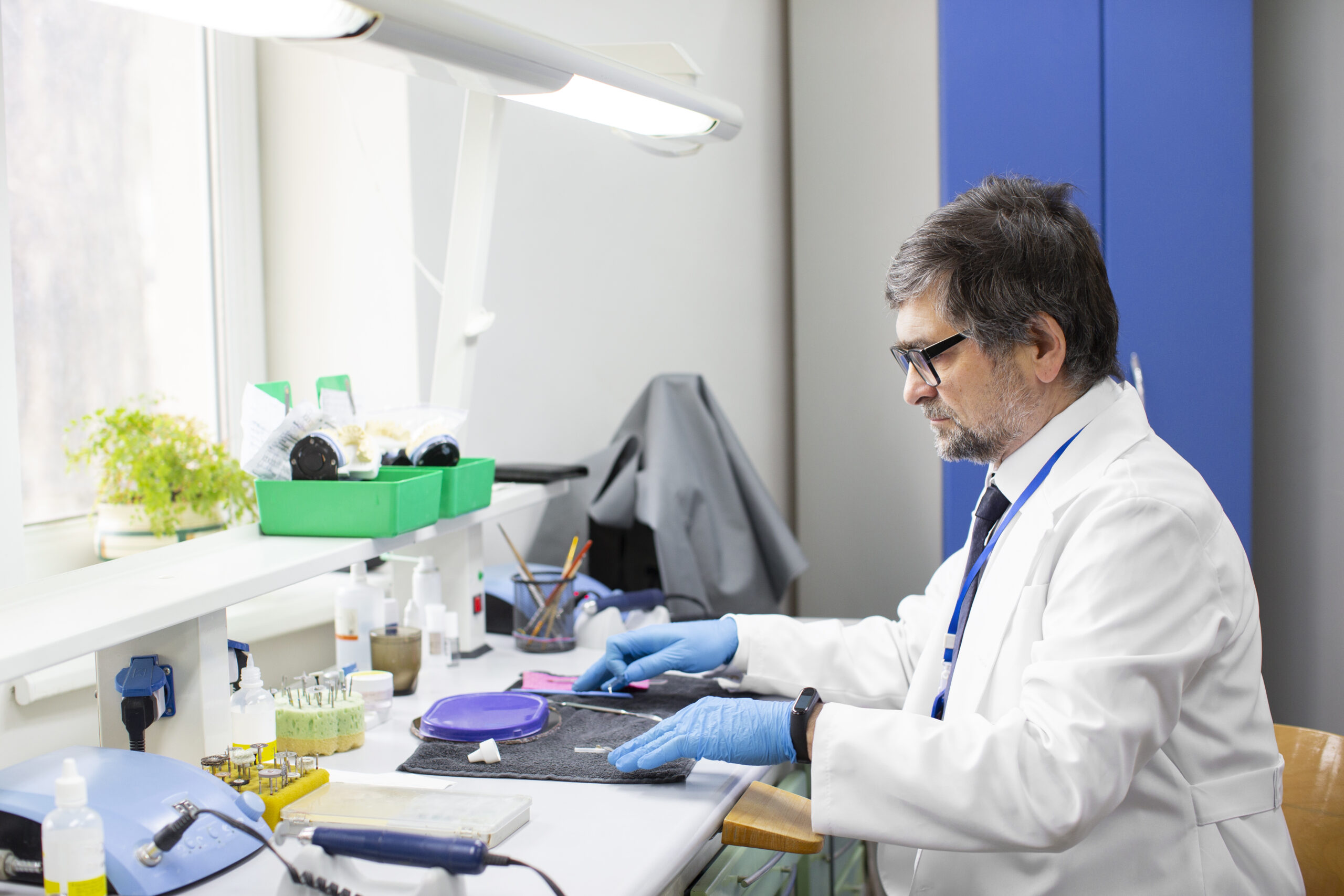
Materials & Surface Characterization
Biotechnology products can involve materials and surfaces that influence biological interaction,
product behavior, manufacturing, or performance.
Projects may investigate:
- Biomaterials
- Coatings
- Surface chemistry
- Surface morphology
- Material identity
- Material interfaces
- Contamination
- Particles
- Residues
- Product changes
Relevant approaches may include SEM, XPS, FTIR, Raman spectroscopy, microscopy, and
other appropriate analytical methods.
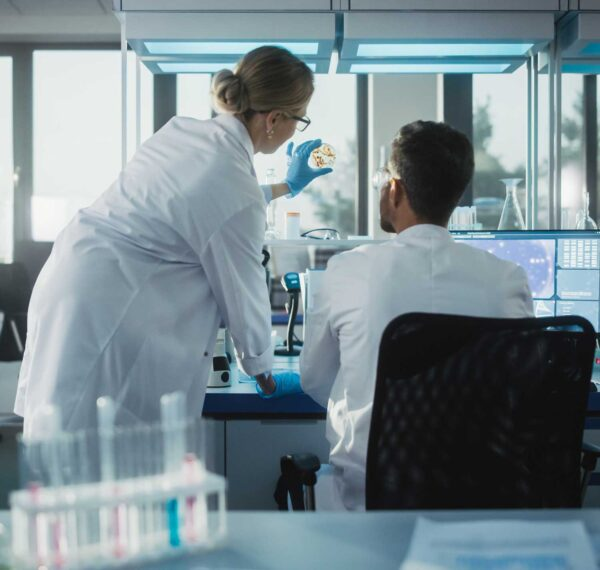
Microscopy & Imaging
Microscopy can help biotechnology researchers examine structures, surfaces, particles,
materials, and other observable characteristics that may contribute to a larger scientific
investigation.
Imaging may be combined with:
- Materials characterization
- Surface analysis
- Chemical analysis
- Biological studies
- Product comparison
- Failure investigation
Where higher-resolution surface information is required, specialized techniques such as SEM
may be appropriate.

Biotechnology Product Development
Move From Experimental Concept Toward a Better- Characterized Product
Transitioning biotechnology from research toward a product can introduce new scientific
questions.
Development programs may require:
- Feasibility testing
- Product characterization
- Materials evaluation
- Biological testing
- Analytical testing
- Method development
- Prototype or formulation comparison
- Product consistency studies
- Stability-related investigation
- Manufacturing troubleshooting
- Verification planning
The objective is to generate scientific information at the point where it can help guide
development decisions.
Analytical Method Development
Novel biotechnology products may require analytical approaches for which an established
method does not yet exist.
Method development may involve:
- Defining the analytical objective
- Selecting the measurement approach
- Sample preparation
- Controls
- Detection strategy
- Analytical range
- Reproducibility
- Potential interference
- Data interpretation
- Unexpected analytical results
Early feasibility work can help determine whether a proposed analytical approach is suitable
before more extensive method development begins.
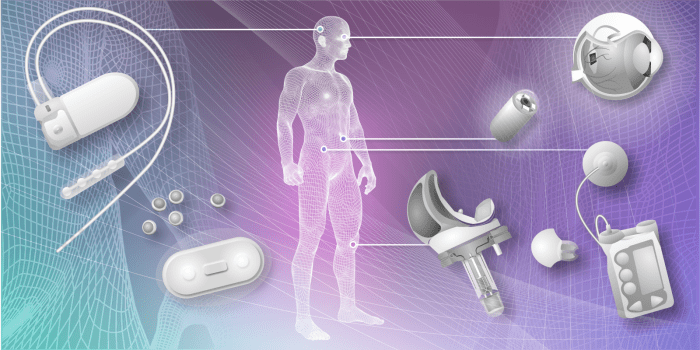
Assay Development
Build Experimental Approaches Around the Biology
Some biotechnology questions require a customized assay rather than a standard laboratory
test.
Assay-development projects may involve:
- Selecting an appropriate biological model
- Defining the measurable response
- Establishing controls
- Experimental conditions
- Reproducibility
- Comparative samples
- Data interpretation
- Optimization
The assay should ultimately generate information relevant to the scientific or development
decision being made.

Scientific Troubleshooting for Biotechnology
Investigate Unexpected Results Systematically
Biotechnology systems can produce unexpected results for many reasons.
Potential contributors may include:
- Biological variability
- Raw materials
- Contamination
- Product composition
- Experimental conditions
- Analytical methods
- Cell culture conditions
- Manufacturing changes
- Materials or surfaces
- Sample handling
An effective investigation begins by defining what changed and identifying meaningful
comparison samples or controls.
Testing can then be selected according to the most plausible hypotheses.

Contamination Investigation
Unexpected contamination in biotechnology research or manufacturing may involve:
- Microorganisms
- Particles
- Residues
- Raw materials
- Chemicals
- Environmental sources
- Water
- Equipment
- Processing materials
Depending on the observation, investigation may combine:
Microbiology
●
Microscopy
●
Chemical Analysis
●
Materials Characterization
●
Molecular Approaches Where Appropriate
The objective is to generate evidence that helps narrow the potential source.
Unexpected Experimental Results
When experimental results change unexpectedly, simply repeating the same test may not
explain why.
A broader investigation may examine:
- Experimental controls
- Sample history
- Raw materials
- Biological systems
- Analytical methods
- Environmental conditions
- Product differences
- Contamination
- Process changes
CMDC Labs can evaluate multidisciplinary investigations where several possible causes need
to be differentiated experimentally.
Flow Cytometry
Where confirmed and appropriate, flow cytometry can provide information about cellular
populations and measurable cellular characteristics.
Potential biotechnology applications may involve:
- Cell-based research
- Comparative cell populations
- Assay development
- Biological-response studies
- Experimental research
- Product-development studies
Specific capabilities, markers, sample requirements, and experimental objectives should be
established before a project begins.
Biotechnology Scientific Consulting
Novel technologies frequently present questions for which there is no obvious standard testing
pathway.
Scientific consultation can help evaluate:
- Experimental strategy
- Assay design
- Analytical methods
- Biological models
- Existing data
- Product characterization
- Technology-development questions
- Unexpected results
- Research strategy
- Follow-up investigation
Where appropriate, the resulting strategy can connect directly to available CMDC Labs
laboratory resources.

Quality & Regulatory Support
Prepare Scientific Programs for Increasingly Formal
Requirements
As biotechnology moves from exploratory research toward commercialization, the intended use
of laboratory data can change.
Projects may progress from:
Exploratory Research
↓
Development Testing
↓
Characterization
↓
Method Development
↓
Verification / Validation
↓
Quality or Regulatory Testing
Testing appropriate for one stage may not automatically satisfy the requirements of another.
CMDC Labs can evaluate projects involving:
- Method validation
- Product verification
- Validation support
- Quality-related testing
- Regulatory testing
- Manufacturing investigations
- Documentation requirements
Laboratory Capabilities for Biotechnology Projects
Biotechnology projects may draw upon several CMDC Labs capability areas.
Biological & Cellular Science
Cell culture, mammalian-cell testing, cell-based assays, biological-response evaluation, and
other appropriate biological approaches.
Molecular Biology
PCR and other confirmed molecular approaches where appropriate.
Microbiology
Microbial identification, enumeration, contamination investigation, environmental monitoring,
and antimicrobial studies.
Analytical Chemistry
HPLC, GC, ICP-MS, FTIR, Raman spectroscopy, LC-MS/MS where confirmed and appropriate,
and related analytical approaches.
Materials & Surface Science
SEM, XPS, microscopy, materials characterization, surface characterization, and material
identification.
Experimental Method Development
Customized analytical and biological approaches designed around new scientific questions.
Support for Biotechnology Startups & Emerging Technologies
Early-stage biotechnology companies often need access to scientific capabilities without
building every laboratory resource internally.
CMDC Labs can evaluate appropriate startup projects involving:
- Feasibility studies
- Proof-of-concept work
- Experimental testing
- Product characterization
- Assay development
- Method development
- Product-development support
- Troubleshooting
- Research
- Verification planning
The testing strategy can evolve as the technology progresses rather than requiring the complete
later-stage program at the beginning.
A Connected Biotechnology Development Pathway
A biotechnology project may move through:
Scientific Concept
↓
Research & Proof of Concept
↓
Experimental Assay Development
↓
Product / Technology Characterization
↓
Product Development
↓
Analytical Method Development
↓
Verification & Validation
↓
Quality / Regulatory Testing
↓
Commercialization
↓
Ongoing Scientific Support
Another may begin with an unexpected problem:
Unexpected Result
↓
Review Existing Data
↓
Develop Hypotheses
↓
Targeted Multidisciplinary Investigation
↓
Identify Meaningful Differences
↓
Follow-Up Research
↓
Development or Process Changes
↓
Verification
CMDC Labs’ Scientific Solutions architecture allows projects to move between these scientific
resources as the question evolves.
Have a Biotechnology Question Rather Than a Defined Test?
You don&’t need to know which instrument, assay, or laboratory method is required before
contacting CMDC Labs.
Tell us:
- What technology are you developing?
- What biological system is involved?
- What stage is the project in?
- What are you trying to demonstrate or understand?
- What happened unexpectedly?
- What data do you already have?
- What samples or controls are available?
- What decision will the new data support?
Our team can evaluate the question and determine which available laboratory resources may be
appropriate.
Already Know What Testing You Need?
If your project already has a defined method, assay, analyte, protocol, sample type, or testing requirement, proceed directly to the appropriate laboratory service.
Multidisciplinary Science for Emerging Biotechnology
Biotechnology increasingly connects biology, chemistry, microbiology, materials science, analytical technology, product development, manufacturing, and regulatory science.
As a result, the most useful scientific answer may require evidence from more than one discipline.
CMDC Labs helps organizations approach these projects from the underlying scientific question:
What do we need to understand?
From there, appropriate laboratory capabilities can be combined to generate evidence that
supports the next research, development, quality, or commercialization decision.