Laboratory Capabilities
Multidisciplinary Scientific Capabilities for Testing, Research, Development & Investigation
Complex scientific questions rarely depend on a single laboratory technique.
A product failure may require chemical analysis and materials characterization.
A contamination investigation may involve microbiology, analytical chemistry, and environmental
testing..
A product-development project may require characterization, biological evaluation, method
development, and comparative analysis.
A research program may require several analytical technologies working together to answer one
scientific question.
CMDC Labs brings together multidisciplinary laboratory capabilities to support organizations
across routine testing, scientific troubleshooting, product development, research and
development, quality investigations, validation-related work, and customized scientific
projects.
Our laboratory capabilities span analytical chemistry, materials and surface characterization,
microbiology, biological-response testing, environmental analysis, and customized analytical
methods.
CMDC Labs is
accredited under
Start With the Scientific Question
Choosing a laboratory technique should begin with understanding what information is needed.
Some clients already know the analytical method they require.
Others begin with questions such as:
- What is this material?
- What chemicals are present?
- Why did this product fail?
- Is there contamination?
- Why are two samples behaving differently?
- What changed during manufacturing?
- What is present on this surface?
- How is this material interacting with biological systems?
- What is causing an unexpected result?
- Which analytical method should we use?
- Can a customized method be developed for this product or matrix?
CMDC Labs can help determine which laboratory capabilities may be appropriate for the scientific objective.
Analytical Chemistry & Instrumentation
Generate Chemical Information About Products,
Materials, Ingredients, and Unknowns
Analytical chemistry can help organizations understand composition, concentration,
contamination, degradation, impurities, trace elements, and other chemical characteristics.
Depending on the scientific question, CMDC Labs capabilities include analytical technologies
and approaches such as:
HPLC
High-Performance Liquid Chromatography can support quantitative and qualitative analysis of
compounds in a variety of products, materials, formulations, and research samples.
Potential applications may include:
- Compound identification and quantification
- Product characterization
- Formulation analysis
- Purity-related investigation
- Stability studies
- Comparative analysis
- Research applications
- Method development
ICP-MS
Inductively Coupled Plasma Mass Spectrometry provides highly sensitive elemental analysis for applications requiring detection and measurement of metals and trace elements.
Potential applications may include:
- Heavy metals
- Trace elements
- Product contamination
- Water analysis
- Environmental samples
- Raw materials
- Ingredients
- Supplements
- Product characterization
- Research applications
Gas Chromatography
Gas chromatography can support analysis of volatile and semi-volatile compounds depending
on the sample, analyte, and analytical objective.
Applications may include:
- Chemical characterization
- Volatile compound analysis
- Product comparison
- Contamination investigation
- Research
- Product development
- Quality investigation

Spectroscopy
Understand Materials Through Their Chemical and
Molecular Characteristics
Spectroscopic techniques can provide valuable information about materials, surfaces,
compounds, coatings, contaminants, and product differences.
CMDC Labs capabilities include:
FTIR Analysis
Fourier Transform Infrared Spectroscopy can help characterize and identify materials based on
their molecular absorption characteristics.
FTIR may be useful for:
- Material identification
- Unknown-material investigation
- Product comparison
- Polymer characterization
- Contamination investigation
- Failure analysis
- Surface or residue investigation
- Research and development
Raman Spectroscopy
Raman spectroscopy provides complementary molecular information that can be valuable in
material characterization and scientific investigation.
Potential applications may include:
- Material identification
- Chemical characterization
- Product comparison
- Unknown substances
- Contamination investigation
- Materials research
- Failure analysis


Materials & Surface Characterization
Understand What a Material Is—and What Is Happening at
Its Surface
Materials and surfaces can strongly influence product performance, durability, compatibility,
biological interaction, manufacturing behavior, and failure mechanisms.
CMDC Labs supports materials and surface investigations involving:
- Material identification
- Material comparison
- Surface characterization
- Coating evaluation
- Surface modification
- Material degradation
- Contamination
- Product failure
- Manufacturing differences
- Research and development
Testing can support routine quality activities as well as investigation of unexpected results or
changes.

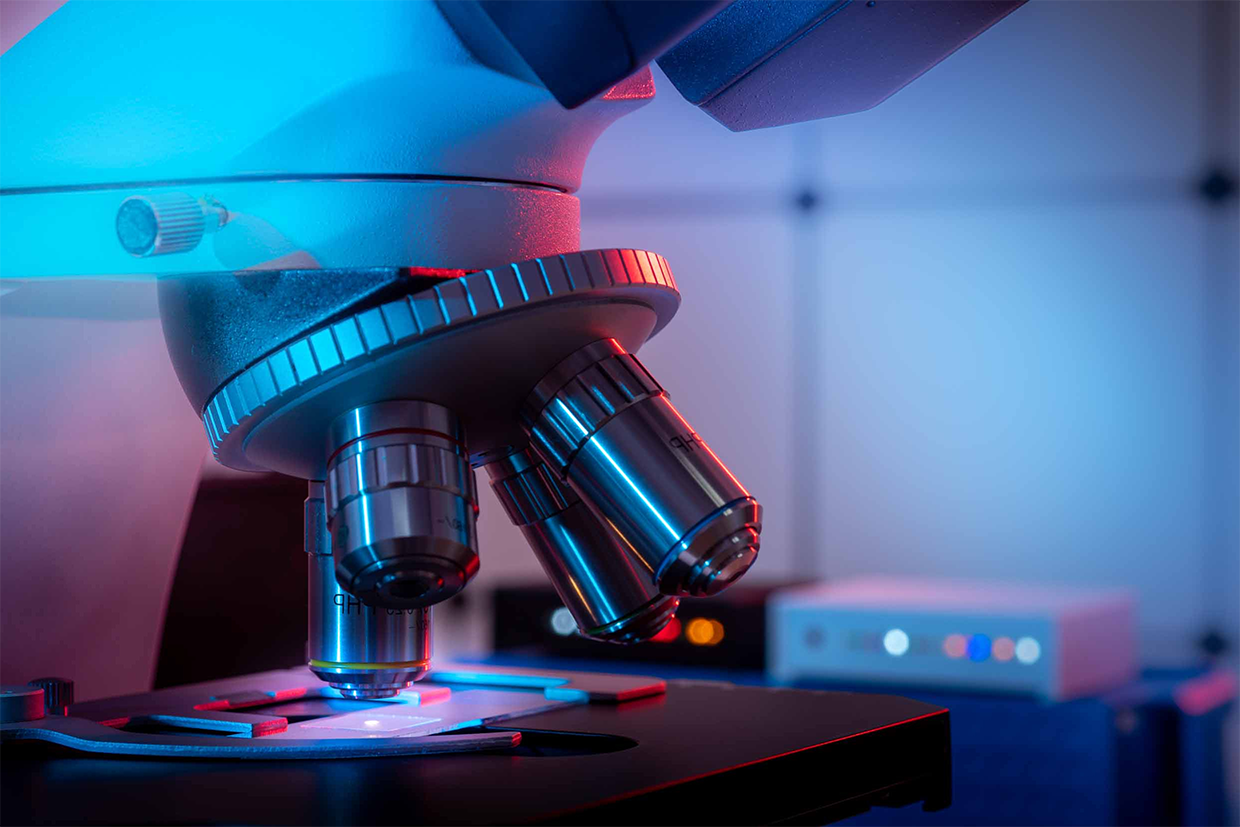
Scanning Electron Microscopy (SEM)
SEM can provide high-resolution information about surface morphology and material
characteristics.
Depending on the scientific question, SEM may support:
- Surface examination
- Material characterization
- Particle investigation
- Failure analysis
- Product comparison
- Coating evaluation
- Contamination investigation
- Manufacturing investigations
- Research
X-Ray Photoelectron Spectroscopy (XPS)
XPS can provide information about the elemental and chemical composition of material
surfaces.
Surface chemistry can be particularly important when investigating coatings, treatments,
contamination, material interactions, or product-performance differences.
Potential applications include:
- Surface chemical characterization
- Coating analysis
- Material comparison
- Surface contamination
- Failure investigation
- Product development
- Surface-treatment evaluation
- Research

Microbiology Capabilities
Investigate Microorganisms, Contamination, and
Microbial Behavior
Microbiology plays a critical role in product safety, manufacturing, food science, water quality,
medical devices, pharmaceuticals, research, and contamination investigation.
CMDC Labs microbiology capabilities support appropriate work involving:
- Microbial identification
- Microbial enumeration
- Pathogen testing
- Bioburden
- Sterility
- Environmental monitoring
- Contamination investigation
- Antimicrobial testing
- Preservative challenge testing
- Product microbiology
- Water microbiology
- Food microbiology
- Research applications
Microbiology projects may involve established methods or customized scientific investigations
depending on the objective.
Mammalian Cell & Biological Response Capabilities
Evaluate How Materials and Products Interact With
Biological Systems
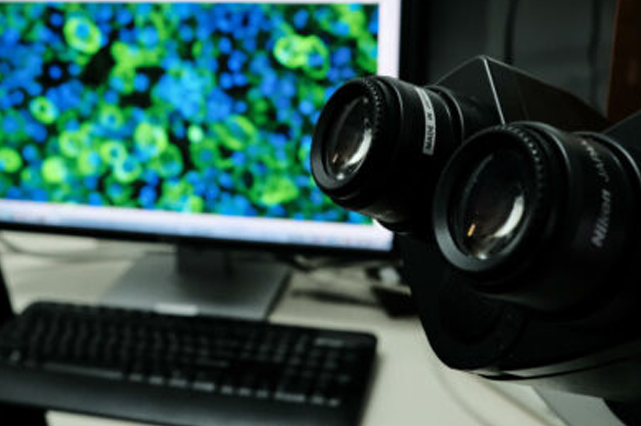
CMDC Labs has established capabilities related to mammalian cellular biology and biological-
response testing.
These capabilities can support appropriate projects involving:
- Mammalian cell testing
- Cell-based evaluation
- Cytocompatibility
- Biological response
- Immune response
- Antimicrobial technologies
- Bioactive surfaces
- Medical-device research
- Materials research
- Product development
- Scientific investigation
Biological-response work may be particularly valuable when the scientific question involves how
a material, surface, compound, or product interacts with living cells.

In-Vitro Testing Capabilities
In-vitro laboratory models can provide scientific information about products, materials,
compounds, surfaces, and biological interactions without immediately requiring more complex
biological models.
Depending on the project, CMDC Labs can support appropriate in-vitro work involving:
- Product evaluation
- Material evaluation
- Biological response
- Cytocompatibility
- Antimicrobial performance
- Research
- Product development
- Comparative studies
- Customized scientific questions
Water & Environmental Laboratory Capabilities
Water and environmental samples can require microbiological, chemical, elemental, and
contaminant analysis depending on the scientific or monitoring objective.
CMDC Labs capabilities support appropriate projects involving:
- Drinking water
- Wastewater
- Groundwater
- Industrial water
- Environmental water
- PFAS
- Heavy metals
- Microbiological contaminants
- Chemical contaminants
- Environmental investigations
- Industrial waste
- Soil-related analysis
Where results are intended for regulatory monitoring, applicable laboratory and program
requirements should be evaluated during project qualification.
Food & Product Analysis Capabilities
Food, ingredients, supplements, consumer products, and other manufactured products may
require multiple laboratory disciplines.
Depending on the project, CMDC Labs capabilities may support:
- Food microbiology
- Pathogen testing
- AOAC-related testing
- Ingredient analysis
- Product characterization
- Heavy metals
- Chemical analysis
- Shelf-life studies
- Preservative challenge testing
- Contamination investigation
- Product-development studies
- Comparative testing
Custom Analytical Method Development
When an Established Method Does Not Fully Address the
Question
Not every scientific question can be answered using an off-the-shelf analytical procedure.
Unique products, unusual matrices, emerging technologies, specialized materials, new
formulations, and research projects may require development or adaptation of an analytical
approach.
CMDC Labs can support appropriate analytical method-development projects involving:
- Analytical approach selection
- Sample-preparation strategy
- Method adaptation
- Detection strategy
- Analytical feasibility
- Method optimization
- Method performance evaluation
- Product- or matrix-specific approaches
Where formal validation will eventually be required, the intended use of the method should be
considered during development.
Method Validation Capabilities
Analytical methods may require validation or other performance evaluation depending on their
intended purpose.
CMDC Labs can support appropriate method-validation projects based on:
- The analytical method
- Product or matrix
- Intended application
- Scientific objective
- Required performance
- Intended use of the resulting data
- Contamination
- Product performance
- Packaging
- Product inconsistency
- Comparative studies
Where the work will support regulatory submission or monitoring, applicable requirements
should be established during project qualification.
Multidisciplinary Laboratory Investigations
One Scientific Question May Require Several Capabilities
Some projects cannot be adequately investigated through a single analytical technique.
For example:
Unknown Material
May involve spectroscopy, microscopy, elemental analysis, chemical analysis, or surface
characterization.
Product Failure
May involve materials characterization, chemistry, microbiology, comparison testing, and
manufacturing information.
Contamination
May require microbiology, chemical analysis, spectroscopy, metals analysis, or environmental
testing.
Product Development
May involve chemical characterization, materials, microbiology, biological response, stability,
and method development.
Research
May require several analytical technologies combined within a customized experimental
program.
CMDC Labs can help determine which combination of laboratory capabilities may provide useful scientific information.
Laboratory Capabilities Supporting Scientific Solutions
CMDC Labs’ analytical capabilities are not isolated laboratory services.
They provide the scientific tools supporting broader projects throughout CMDC Labs 2.0.
Scientific Troubleshooting & Failure Analysis
Use laboratory capabilities to investigate failures, contamination, degradation, unexpected
results, and product differences.
Product Development
Use analytical information to characterize products, evaluate materials, compare prototypes,
investigate formulations, and support optimization.
Scientific Consulting
Determine which analytical approaches may be appropriate before beginning complex scientific
work.
Research & Development
Use CMDC Labs’ laboratory capabilities as an extension of internal research resources.
Quality & Regulatory Support
Generate appropriate scientific information for quality investigations, verification, validation,
monitoring, and regulatory-related projects.
Capabilities Across Industries
CMDC Labs’ laboratory technologies can support scientific projects across multiple industries,
including:
- Medical devices
- Biotechnology
- Pharmaceuticals and life sciences
- Food and beverage
- Nutraceuticals and supplements
- Cosmetics and personal care
- Agriculture and dairy
- Water utilities
- Environmental organizations
- Industrial manufacturing
- Research institutions
- Technology developers
The specific capabilities used depend on the product, sample, scientific objective, and intended
use of the resulting data.

Already Know the Required Test or Method?
If you already know the analytical method or laboratory capability required, you can begin
directly with the appropriate service.
Not Sure Which Laboratory Technique You Need?
Instead, tell us:
What are you trying to understand?
What type of sample or product is involved?
What happened—or what are you trying to develop?
How will the resulting information be used?
CMDC Labs can evaluate the scientific question and determine which available laboratory capabilities may be appropriate.
Scientific Capabilities Connected by the Question
Laboratory instruments generate measurements. Scientific investigations require understanding how those measurements relate to the question.
CMDC Labs combines multidisciplinary laboratory capabilities with scientific troubleshooting, product-development support, research, consulting, quality investigation, and analytical expertise to help organizations move from uncertainty toward useful scientific information.
Whether you already know the analytical method you need or simply have a scientific question that needs investigation, start with the objective.