Medical Device Solutions
Scientific Testing, Product Development & Problem- Solving for Medical Device Companies
Medical device development requires more than completing a list of laboratory tests.
Manufacturers may need to understand materials, surfaces, microorganisms, biological
response, product performance, manufacturing changes, contamination, sterilization,
product failures, and regulatory testing requirements throughout the product lifecycle.
CMDC Labs supports medical device companies with multidisciplinary scientific resources
spanning laboratory testing, product development, scientific troubleshooting, research
and development, scientific consulting, materials and surface characterization, biological
testing, sterility and bioburden, and quality and regulatory support.
Whether you are developing a new device, investigating an unexpected result, characterizing a
material, preparing for verification or validation, or troubleshooting an existing product, the
scientific approach should begin with the question you need to answer.
Our team works with manufacturers, product developers, researchers, quality teams, and other
organizations to understand the scientific objective, intended use of the resulting data, and
applicable laboratory requirements before work begins.
CMDC Labs is
accredited under
Scientific Support Across the Medical Device Lifecycle
Medical device programs can generate different scientific questions at different stages.
CMDC Labs can support appropriate projects involving:
- Early-stage research
- Feasibility studies
- Prototype development
- Materials selection
- Surface characterization
- Product characterization
- Biological evaluation
- Microbiology
- Sterility and bioburden
- Analytical method development
- Product verification
- Validation support
- Manufacturing investigations
- Contamination investigation
- Product failure analysis
- Commercialization readiness
- Post-development troubleshooting
Rather than treating these activities as isolated tests, CMDC Labs can help connect laboratory data with the larger development or investigation objective.
Medical Device Testing
When You Already Know What Testing You Need
Some medical device projects begin with a clearly defined laboratory requirement.
CMDC Labs provides testing and analytical capabilities that may support medical device
manufacturers throughout development, characterization, quality activities, and scientific
investigation.
Relevant areas include:
- Medical device testing
- Implant testing
- Sterility testing
- Bioburden testing
- Materials characterization
- Surface characterization
- Chemical and analytical testing
- Microbiology
- Biological-response testing
- Product characterization
- Contamination analysis
Medical Device Product Development
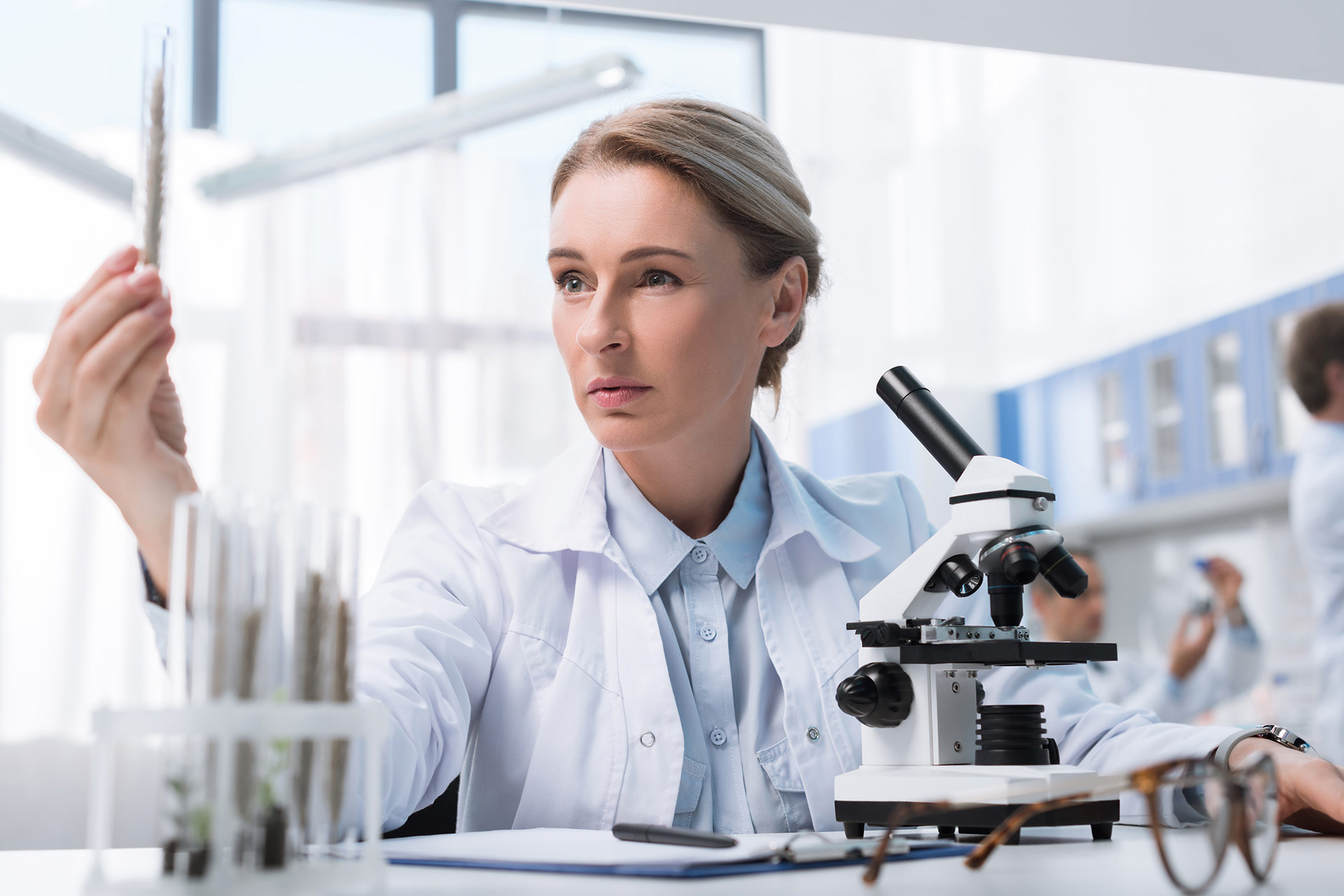
Generate Scientific Information Earlier in Development
Testing performed only at the end of product development can reveal problems when changes
are more difficult and expensive to make.
Scientific investigation earlier in development can help teams better understand:
- Materials
- Surfaces
- Coatings
- Prototypes
- Manufacturing changes
- Biological interactions
- Product characteristics
- Potential contamination risks
- Analytical requirements
- Product consistency
CMDC Labs can support appropriate medical-device development programs from exploratory
research and prototype evaluation through characterization and later-stage testing.
Prototype Testing & Evaluation
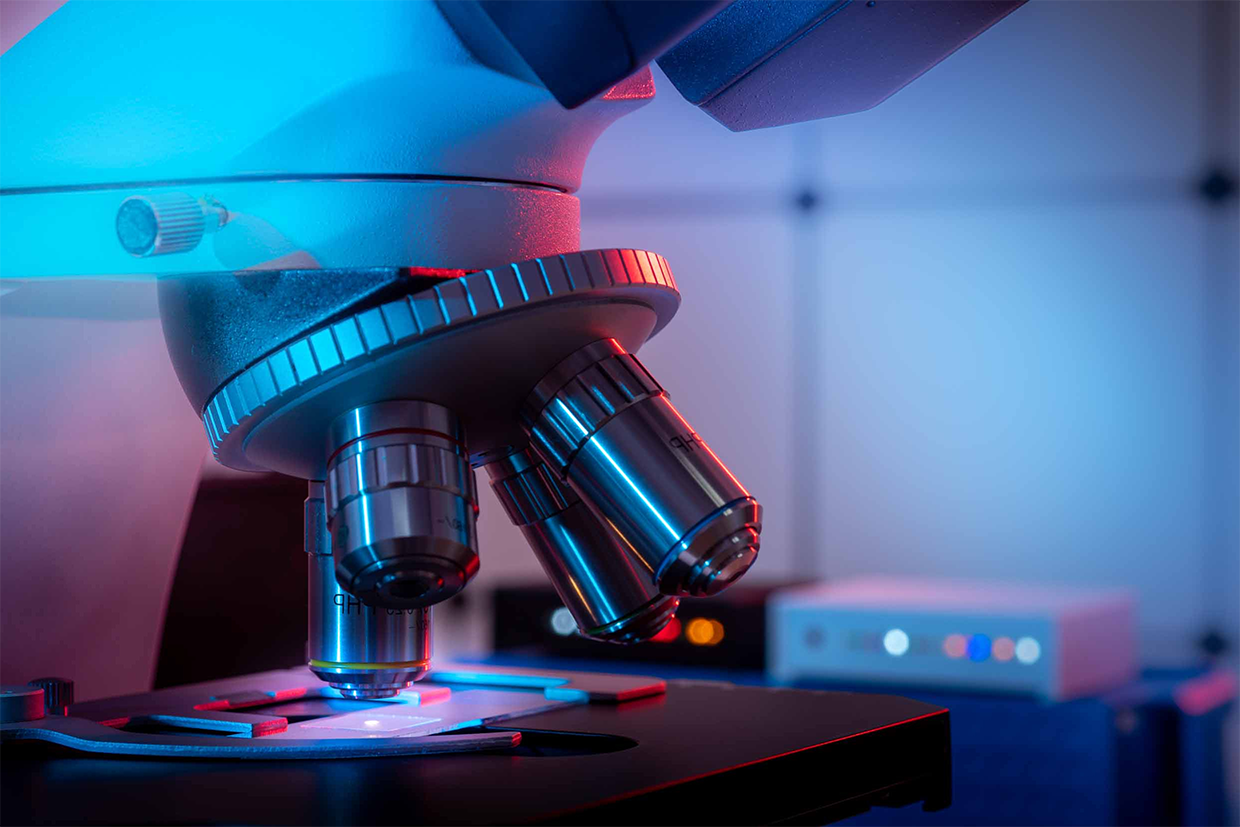
Prototypes can help reveal scientific questions before a device reaches later development
stages.
Depending on the product, prototype evaluation may investigate:
- Material differences
- Surface characteristics
- Product geometry
- Coatings
- Manufacturing effects
- Biological response
- Microbial concerns
- Chemical characteristics
- Comparative performance
Comparing prototypes can also help development teams determine whether design or material
changes produce measurable differences.

Materials Characterization for Medical Devices
Understand the Materials Behind Device Performance
Materials can influence mechanical behavior, surface interactions, manufacturing performance,
biological response, durability, and overall product behavior.
Medical-device materials investigations may involve:
- Material identification
- Comparative material analysis
- Raw materials
- Surface morphology
- Coatings
- Material interfaces
- Unexpected material changes
- Particles
- Residues
- Material degradation
- Supplier changes
CMDC Labs can combine multiple analytical techniques where a single method does not
provide enough information.
Surface Characterization
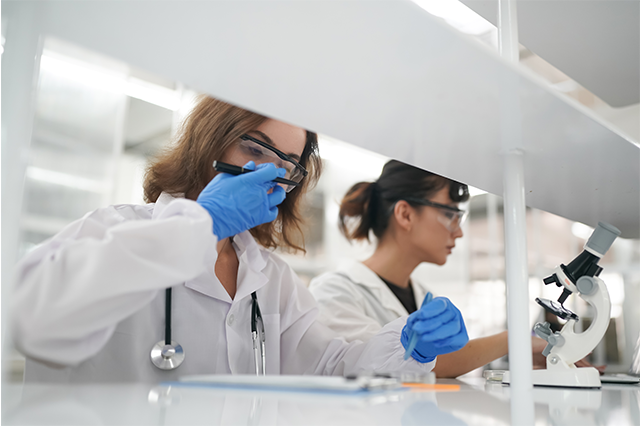
For many medical devices, the surface is where the product interacts with its environment or
biological system.
Surface-related questions may involve:
- Surface chemistry
- Morphology
- Coatings
- Deposits
- Contamination
- Surface modification
- Material interfaces
- Manufacturing changes
- Product failure
- Biological interaction
Relevant analytical approaches may include microscopy, SEM, XPS, FTIR, Raman
spectroscopy, and other appropriate characterization techniques.
Medical Device Sterility & Bioburden
Understand and Control Microbial Risk
Microbiological control is critical for many medical-device products and manufacturing
processes.
CMDC Labs supports appropriate projects involving:
- Sterility testing
- Bioburden testing
- Microbial enumeration
- Microbial identification
- Contamination investigation
- Environmental monitoring
- Sterility-related research
- Validation-related support
The required approach depends on the product, manufacturing environment, intended use,
applicable standard, and purpose of the resulting data.
Biological Response & Cell-Based Testing
Medical devices and biomaterials can interact with biological systems in ways that require
experimental evaluation.
Depending on the research question, biological studies may involve:
- Mammalian-cell testing
- Cell culture
- Cell-based assays
- Cytocompatibility
- Immune-response investigation
- Antimicrobial testing
- Bioactive surfaces
- Comparative biological studies
- Experimental product research
The appropriate model should be selected according to the scientific question rather than
applying the same biological test to every device.
Medical Device Implant Testing
Implantable technologies may present additional questions involving materials, surfaces,
biological interaction, sterility, and product performance.
CMDC Labs can evaluate custom implant-testing projects based on:
- Device design
- Material
- Surface
- Intended application
- Scientific objective
- Required measurements
- Existing data
- Development stage
Where standard testing does not fully address the research question, a customized
experimental approach may be appropriate.
Chemical & Analytical Testing
Medical-device investigations may require chemical information concerning products, materials,
residues, contaminants, coatings, or manufacturing processes.
Relevant capabilities may include:
- Chemical analysis
- Material identification
- Contaminant analysis
- Elemental analysis
- Spectroscopy
- Chromatography
- Surface analysis
- Customized analytical investigations
The analytical method should be selected according to the substance, sample, required
sensitivity, and scientific objective.
Medical Device Failure Analysis
When a Device Doesn’t Behave as Expected
A device failure does not necessarily identify its own cause.
The observed problem may originate from:
- Material changes
- Surface defects
- Contamination
- Manufacturing variation
- Residues
- Coating problems
- Microorganisms
- Environmental exposure
- Product aging
- Supplier changes
- Interactions between several factors
A scientific failure investigation may therefore require several types of evidence.
For example:
Unexpected Device Failure
↓
Review Product History & Existing Data
↓
Compare Failed and Acceptable Samples
↓
Materials / Surface / Chemical / Microbiological Investigation
↓
Identify Meaningful Differences
↓
Develop Potential Root-Cause Hypotheses
↓
Perform Follow-Up Testing
Medical Device Contamination Investigation
Unexpected contamination may appear as:
- Particles
- Residues
- Fibers
- Deposits
- Microbial contamination
- Surface abnormalities
- Chemical contaminants
- Unknown materials
Identifying the source may require combining several techniques.
An investigation might involve:
Microscopy
●
Materials Characterization
●
Spectroscopy
●
Chemical Analysis
●
Microbiology
depending on the suspected contaminant.

Manufacturing & Process Troubleshooting
Manufacturing changes can introduce scientific questions even when the product design itself
has not changed.
Examples may involve:
- Lot-to-lot variation
- New raw materials
- Supplier changes
- Process changes
- Cleaning changes
- Surface defects
- Residues
- Unexpected particles
- Coating differences
- Microbial contamination
- Product consistency
Comparing samples and manufacturing information can help determine which variables should
be investigated experimentally.
Medical Device Research & Development
Scientific Resources for New Technologies
Emerging medical technologies may require experimental work that does not fit neatly into a
standard testing package.
CMDC Labs can evaluate R&D projects involving:
- New device concepts
- New materials
- Surface technologies
- Coatings
- Biomaterials
- Antimicrobial technologies
- Bioactive surfaces
- Experimental implants
- Proof-of-concept studies
- Comparative studies
- Customized biological models
- Analytical method development
Research projects can draw upon multiple CMDC Labs capabilities where appropriate.
Analytical Method Development for Medical Devices
Existing analytical methods may not always address a new device, material, coating,
contaminant, or experimental technology.
Method-development projects may involve:
- Defining the analyte or characteristic of interest
- Selecting an analytical technique
- Sample preparation
- Detection strategy
- Controls
- Analytical performance
- Reproducibility
- Potential interference
- Data interpretation
Feasibility work may be appropriate before developing a larger testing program.

Product Characterization
Build a Better Scientific Understanding of the Device
Characterization can help establish information about a product before later-stage verification,
validation, quality testing, or commercialization.
Depending on the device, characterization may involve:
- Materials
- Surfaces
- Chemical properties
- Biological response
- Microbiology
- Product consistency
- Comparative samples
- Manufacturing effects
- Analytical performance
Characterization programs should be designed around the product and the decisions the
resulting data must support.
Verification & Validation Support
As a medical-device program advances, testing requirements generally become more formally
defined.
CMDC Labs can evaluate appropriate laboratory work supporting:
- Design verification
- Product validation
- Method validation
- Pre-market testing
- Quality-related testing
- Regulatory testing
- Commercialization readiness
The applicable standards, methods, documentation requirements, accreditation scope, and
intended use of the data should be established before testing begins.
Regulatory Testing Support
Match the Laboratory Strategy to the Intended Use of the
Data
Medical-device testing performed for exploratory research is not necessarily equivalent to
testing intended for a formal regulatory application.
Before regulatory-related work begins, project qualification should establish:
- Intended use of the data
- Applicable standards
- Required methods
- Validation requirements
- Documentation expectations
- Quality-system requirements
- Accreditation requirements
- Reporting requirements
CMDC Labs can evaluate appropriate regulatory-testing projects according to these
requirements.
Scientific Consulting for Medical Device Companies
Some device-development challenges require scientific strategy before laboratory work begins.
Consulting may help organizations evaluate:
- Testing strategy
- Experimental design
- Materials
- Surface technologies
- Biological models
- Analytical methods
- Failure investigations
- Product-development questions
- Existing laboratory data
- Verification or validation planning
- Research programs
CMDC Labs' multidisciplinary background can help connect the scientific question with
appropriate laboratory resources.
Laboratory Capabilities for Medical Device Projects
Medical-device projects may draw upon capabilities across several scientific disciplines.
Analytical Chemistry
HPLC, ICP-MS, GC, FTIR, Raman spectroscopy, LC-MS/MS where confirmed and appropriate,
and other analytical approaches.
Materials & Surface Science
Material characterization, material identification, SEM, XPS, microscopy, surface
characterization, and spectroscopy.
Microbiology
Sterility, bioburden, microbial identification, contamination investigation, and environmental
monitoring.
Biological & Cellular Science
Mammalian-cell testing, cell culture, cell-based assays, immune-response testing,
cytocompatibility, and other appropriate biological models.
Research & Method Development
Customized experiments, analytical method development, product characterization, and
multidisciplinary research.
Support for Medical Device Startups
Early-stage medical-device companies often need to make scientific decisions while managing
limited resources, evolving designs, and commercialization timelines.
CMDC Labs can support appropriate startup projects involving:
- Feasibility testing
- Prototype evaluation
- Materials
- Product characterization
- Research
- Testing strategy
- Method development
- Verification planning
- Troubleshooting
- Commercialization-related scientific support
The goal is to generate useful scientific information at the stage where it can best support the
next development decision.

A Connected Scientific Pathway for Medical Device Development
A medical-device project might move through CMDC Labs in several stages:
Concept
↓
Research & Feasibility
↓
Prototype Development
↓
Materials / Surface / Biological Characterization
↓
Product Characterization
↓
Analytical Method Development
↓
Verification & Validation Support
↓
Pre-Market / Regulatory Testing
↓
Commercialization
↓
Ongoing Quality & Troubleshooting
Not every product requires every stage.
The purpose of the scientific strategy is to determine what information is needed for this
device, at this stage, for this decision.
Have a Medical Device Problem Rather Than a Testing Request?
You do not need to determine the laboratory method before contacting CMDC Labs.
Tell us:
- What device or technology is involved?
- What stage of development are you in?
- What happened?
- What are you trying to understand?
- Do you have failed and acceptable samples?
- What testing has already been performed?
- What decision will the new data support?
- Verification planning
- Troubleshooting
- Commercialization-related scientific support
CMDC Labs can evaluate the problem and determine which available scientific resources may
be appropriate.
Already Know the Medical Device Test You Need?
you already have a defined test, method, standard, sample type, or protocol, proceed directly
to our medical-device and laboratory-testing services.
Scientific Support Beyond a Single Medical Device Test
Medical-device development brings together engineering, materials science, surface science, chemistry, microbiology, biology, manufacturing, quality, and regulatory
considerations.
A problem in one area can influence another.
CMDC Labs brings these scientific perspectives together so manufacturers, developers, researchers, and innovators can move from:
question → investigation → evidence → better-informed decision.
Whether you are developing a new technology, preparing for formal testing, investigating a product failure, characterizing an implant, or trying to understand an unexpected result, the starting point is the same:
What do you need to understand?