Pharmaceutical Solutions
Laboratory Testing, Product Development & Scientific Support for Pharmaceutical Companies
Pharmaceutical products require scientific understanding across development, manufacturing,
quality control, microbiology, analytical chemistry, stability, contamination control, and regulatory
activities.
A pharmaceutical project may begin with a clearly defined testing requirement—or with a much
broader question:
.
Why did this batch change?
Is microbial contamination affecting the product or process?
How should we characterize this formulation or raw material?
What analytical method is appropriate?
What testing will be required as the product advances?
CMDC Labs supports pharmaceutical companies with multidisciplinary scientific resources
spanning laboratory testing, analytical chemistry, microbiology, product development,
scientific troubleshooting, research and development, method development, scientific
consulting, and quality and regulatory support.
CMDC Labs is
accredited under
Scientific Support Across the Pharmaceutical Lifecycle
Scientific needs can change substantially as a pharmaceutical product moves from research
toward development, manufacturing, quality control, and commercialization.
CMDC Labs can evaluate appropriate projects involving:
- Research and development
- Formulation-related investigation
- Raw-material evaluation
- Product characterization
- Analytical testing
- Microbiology
- Contamination investigation
- Stability-related studies
- Analytical method development
- Method validation
- Manufacturing investigations
- Product consistency
- Quality testing
- Verification and validation support
- Regulatory-related testing
- Scientific troubleshooting
The appropriate strategy depends on the product, development stage, scientific objective, and intended use of the resulting data.
Pharmaceutical Laboratory Testing
When the Analytical Requirement Is Already Defined
Some pharmaceutical projects begin with an established method, specification, standard, or
testing requirement.
CMDC Labs provides laboratory capabilities that can support appropriate pharmaceutical
projects involving:
- Chemical analysis
- Microbiological testing
- Raw-material testing
- Heavy-metal analysis
- Contaminant analysis
- Product characterization
- Stability-related testing
- Method validation
- Customized scientific testing
Where testing supports a formal quality or regulatory program, applicable requirements should
be established during project qualification.

Analytical Chemistry for Pharmaceutical Products
Analytical chemistry can help pharmaceutical organizations understand the composition,
characteristics, contaminants, and behavior of raw materials and finished products.
Depending on the scientific question, projects may involve:
- Chemical characterization
- Quantitative analysis
- Raw-material analysis
- Contaminant detection
- Heavy-metal analysis
- Comparative analysis
- Product characterization
- Method development
- Stability-related investigation
- Manufacturing troubleshooting
The appropriate analytical technique depends on the analyte, sample matrix, required
sensitivity, and purpose of the data.
Pharmaceutical Microbiology
Microorganisms can influence pharmaceutical product quality, manufacturing environments, raw
materials, water systems, and finished products.
CMDC Labs can support appropriate pharmaceutical microbiology projects involving:
- Microbial enumeration
- Microbial identification
- Contamination investigation
- Environmental monitoring
- Product microbiology
- Raw-material microbiology
- Process-related microbial investigations
- Quality-control support
Microbiological results can also become part of a broader scientific investigation when
contamination source or process behavior is unclear.

Raw Material Testing
Understand Materials Before They Become Part of the
Product
Raw-material variability can influence product development, manufacturing consistency,
analytical results, and finished-product quality.
Scientific evaluation may involve questions concerning:
- Identity
- Composition
- Purity
- Contaminants
- Heavy metals
- Microbiological quality
- Supplier changes
- Lot-to-lot differences
- Material consistency
When unexpected differences occur, comparative analysis can help determine whether raw
materials may be contributing to the observed product or process change.
Pharmaceutical Product Development
Product-development programs may require analytical and microbiological information long
before routine quality testing begins.
CMDC Labs can evaluate development projects involving:
- Formulation-related questions
- Raw-material selection
- Comparative products
- Product characterization
- Analytical method development
- Microbiological evaluation
- Stability-related investigation
- Contamination concerns
- Manufacturing changes
- Scientific troubleshooting
Generating appropriate data earlier in development can help teams better understand a product
before later-stage testing requirements become more formalized.

Product Characterization
Build a Scientific Profile of the Product
Product characterization can help development and quality teams understand important product
characteristics before making decisions about methods, manufacturing, stability, verification, or
further development.
Depending on the project, characterization may involve:
- Chemical properties
- Composition
- Raw materials
- Contaminants
- Microbiology
- Comparative analysis
- Product consistency
- Manufacturing effects
- Stability-related characteristics
The characterization strategy should be designed around the questions the resulting data need
to answer.

Stability Testing & Investigation
Pharmaceutical products may change over time because of interactions among:
- Active or functional ingredients
- Excipients
- Packaging
- Environmental conditions
- Temperature
- Moisture
- Light
- Manufacturing processes
- Microbial factors
- Additional targeted testing
Stability-related scientific work may help evaluate changes in product characteristics over
defined conditions or time periods.
When an unexpected stability result occurs, additional analytical investigation may be required
to understand what changed and why.
Analytical Method Development
Develop Methods Around the Product & Scientific Objective
A suitable analytical method may not already exist for every formulation, analyte, contaminant,
or research question.
Method development can involve:
- Defining the analytical objective
- Selecting an analytical technique
- Sample preparation
- Separation strategy
- Detection strategy
- Controls
- Calibration
- Analytical range
- Potential interference
- Reproducibility
- Data interpretation
Feasibility work may be appropriate before progressing to a fully developed method.
Analytical Method Validation
A method used for exploratory research is not automatically suitable for formal quality or
regulatory use.
Where appropriate, method validation may evaluate characteristics relevant to the intended
application.
The exact validation requirements depend on:
- Method
- Analyte
- Sample matrix
- Intended use
- Required performance
- Quality system
- Applicable regulatory expectations
CMDC Labs can evaluate method-validation projects according to the intended use of the
analytical data.
Pharmaceutical Contamination Investigation
Determine What the Contaminant Is—and Where It May Have Come From
Unexpected contamination can involve:
- Microorganisms
- Particles
- Residues
- Raw materials
- Chemicals
- Metals
- Water
- Manufacturing equipment
- Environmental sources
- Packaging
A useful contamination investigation may therefore require several scientific disciplines.
For example:
Unexpected Contamination
↓
Characterize the Observation
↓
Microbiological / Chemical / Materials Analysis
↓
Compare Products, Lots, Raw Materials or Environments
↓
Evaluate Potential Sources
↓
Perform Follow-Up Testing
Out-of-Specification & Unexpected Results
An unexpected laboratory result does not always identify the underlying cause.
Potential contributors may include:
- Raw-material variation
- Sample preparation
- Product changes
- Manufacturing differences
- Contamination
- Analytical interference
- Method performance
- Storage conditions
- Environmental factors
Scientific investigation should begin by understanding the observation, existing method, product
history, and available comparison data.
Additional testing can then be selected based on the most plausible scientific questions.

Batch-to-Batch & Product Consistency Investigation
Changes between batches can create questions involving:
- Raw materials
- Suppliers
- Manufacturing conditions
- Product composition
- Microbiology
- Contamination
- Analytical performance
- Storage
- Packaging
Comparative laboratory investigation can help determine whether measurable differences exist
and which variables warrant further investigation.
Manufacturing Process Troubleshooting
Investigate Scientific Changes Within the Manufacturing Process
Pharmaceutical manufacturing problems can emerge even when the formulation itself has not
intentionally changed.
Investigations may involve:
- Process changes
- Equipment
- Cleaning
- Water systems
- Raw materials
- Environmental conditions
- Microbial contamination
- Chemical residues
- Product consistency
- Unexpected analytical results
CMDC Labs can evaluate multidisciplinary investigations where laboratory data are needed to
help understand manufacturing-related problems.
Pharmaceutical Research & Development
Research programs may require experimental work outside routine laboratory testing.
CMDC Labs can evaluate appropriate pharmaceutical R&D projects involving:
- Exploratory research
- Applied research
- Formulation investigation
- Comparative studies
- Analytical method development
- Microbiological research
- Product characterization
- Technology evaluation
- Customized scientific studies
- Proof-of-concept work
Projects can draw upon multiple CMDC Labs capabilities where the research question crosses
scientific disciplines.

Scientific Consulting for Pharmaceutical Projects
Sometimes the first requirement is not another laboratory test.
It is determining which scientific question should be investigated next.
Scientific consultation can help evaluate:
- Existing laboratory data
- Analytical strategy
- Method selection
- Product-development questions
- Unexpected results
- Contamination
- Experimental design
- Testing strategy
- Research programs
- Follow-up investigation
Where appropriate, the resulting strategy can then connect directly to available CMDC Labs
testing and analytical capabilities.

Quality Support
Laboratory Data for Better-Informed Quality Decisions
Pharmaceutical quality programs may require laboratory support involving:
- Raw materials
- Product consistency
- Microbiology
- Contamination investigations
- Analytical testing
- Method performance
- Manufacturing investigations
- Stability-related testing
- Verification or validation activities
The required level of method control, documentation, laboratory qualification, and reporting
depends on how the data will be used.
Regulatory Testing Support
Testing intended to support a formal regulatory purpose requires appropriate project
qualification.
Before work begins, relevant considerations may include:
- Intended use of the data
- Applicable methods
- Method validation
- Documentation
- Quality-system requirements
- Laboratory qualifications
- Accreditation scope
- Reporting expectations
- Applicable regulatory framework
CMDC Labs can evaluate appropriate projects based on these requirements.

Laboratory Capabilities for Pharmaceutical Projects
Pharmaceutical projects may require several analytical and scientific capabilities.
Chromatography
HPLC, GC, LC-MS/MS where confirmed and appropriate, and related analytical approaches.
Elemental Analysis
ICP-MS and other appropriate methods for elemental or heavy-metal investigation.
Spectroscopy
FTIR, Raman spectroscopy, and other techniques for appropriate identification and
characterization work.
Microbiology
Microbial enumeration, identification, contamination investigation, and related microbiological
analysis.
Biological & Cellular Capabilities
Cell-based approaches where appropriate to the pharmaceutical research question.
Method Development
Customized analytical approaches where established methods do not adequately address the
product or scientific objective.
Heavy Metals & Elemental Analysis
Raw materials and pharmaceutical products may require evaluation for elemental contaminants
or other metals-related questions.
ICP-MS can provide sensitive elemental analysis for appropriate sample types and analytical
objectives.
Projects may involve:
- Raw materials
- Finished products
- Contaminant investigation
- Comparative analysis
- Product development
- Quality-related testing
Method and sample-preparation requirements depend on the material and intended application.
HPLC Analysis
HPLC can support appropriate pharmaceutical projects requiring separation, identification, or
quantitative analysis of compounds within complex samples.
Potential applications may include:
- Product characterization
- Raw-material analysis
- Comparative analysis
- Method development
- Stability-related investigation
- Research
- Quality-related testing
The method should be selected or developed according to the analyte and intended use of the
data.

LC-MS/MS Analysis
Where confirmed and scientifically appropriate, LC-MS/MS may provide additional selectivity
and sensitivity for particular analytical questions.
Potential applications may involve:
- Quantitative analysis
- Targeted compounds
- Complex matrices
- Research
- Product characterization
- Method development
- Trace-level investigation
Specific LC-MS/MS capabilities and project suitability should be confirmed during project
qualification.
Pharmaceutical Microbiology & Environmental Monitoring
Microbial control may extend beyond the finished product into the manufacturing environment.
Depending on the project, scientific support may involve:
- Environmental monitoring
- Microbial identification
- Microbial enumeration
- Contamination investigation
- Water-related microbiology
- Manufacturing investigations
- Quality-program support
Findings from environmental and product testing can sometimes be considered together when
investigating potential contamination pathways.
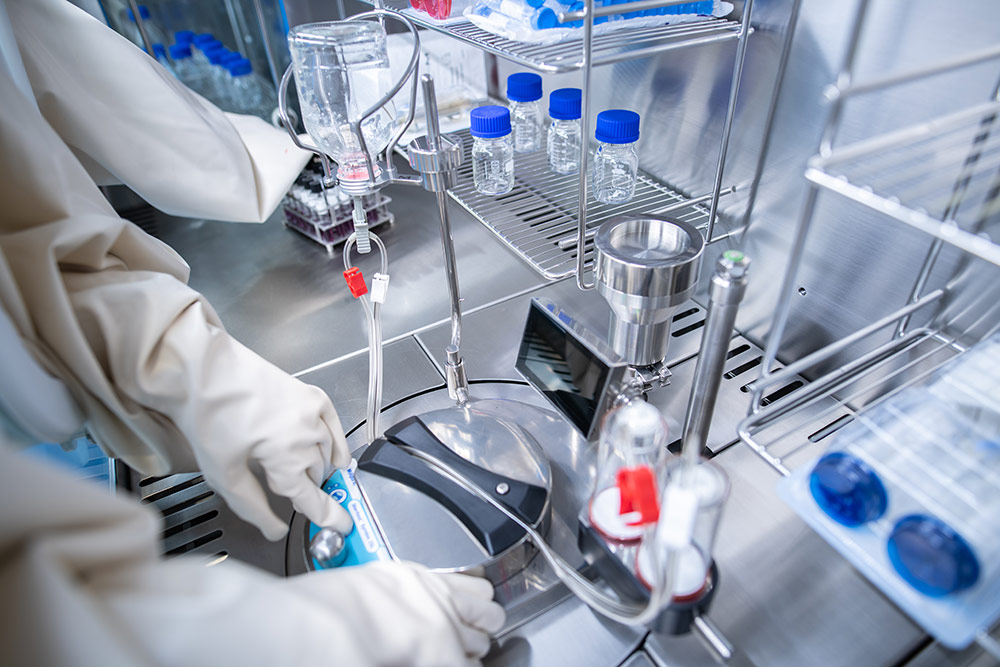
A Connected Scientific Pathway for Pharmaceutical Products
A pharmaceutical program might move through:
Research
↓
Product Development
↓
Raw-Material & Product Characterization
↓
Analytical Method Development
↓
Stability & Microbiological Evaluation
↓
Method Validation
↓
Quality / Regulatory Testing
↓
Manufacturing
↓
Ongoing Quality & Troubleshooting Another project may begin after commercialization: Unexpected Result
↓
Scientific Investigation
↓
Comparative Analysis
↓
Identify Meaningful Differences
↓
Investigate Potential Cause
↓
Corrective Development or Process Work
↓
Follow-Up Testing
Not every pharmaceutical project follows the same pathway.
The scientific strategy should reflect the product and the decision that needs to be made.
Have a Pharmaceutical Problem Rather Than a Defined Test?
You do not need to identify the analytical instrument or laboratory method before contacting
CMDC Labs.
Tell us:
- What product or material is involved?
- What stage is the project in?
- What happened?
- What have you already tested?
- Do you have comparison or control samples?
- What are you trying to understand?
- How will the resulting data be used?
CMDC Labs can evaluate the problem and determine which available scientific resources may be appropriate.
Already Know What Pharmaceutical Testing You Need?
If your project already specifies a method, analyte, sample type, standard, protocol, or testing requirement, proceed directly to the relevant laboratory service.
Scientific Support Beyond Routine Pharmaceutical Testing
Pharmaceutical science connects chemistry, microbiology, formulation, raw materials, analytical methods, manufacturing, product stability, quality systems, and regulatory
considerations.
CMDC Labs’ multidisciplinary Scientific Solutions model is designed to connect these areas when the scientific question extends beyond a single routine test.
Whether your project begins with product development, a defined analytical requirement, an unexpected result, contamination, research, method development, or a quality concern, the objective is to generate information that helps support the next decision.