Product Development
Scientific Support From Early Ideas to Better- Characterized Products
Developing a product requires more than passing a final test.
Before a product reaches commercialization, organizations may need to understand its
materials, formulation, ingredients, performance, stability, biological interaction, manufacturing
behavior, contaminants, failure modes, and other characteristics that can influence whether the
product performs as intended.
CMDC Labs provides multidisciplinary scientific and laboratory support throughout product
development.
Whether you are evaluating an early concept, comparing prototypes, investigating a formulation,
selecting materials, establishing analytical methods, studying stability, preparing for verification
and validation activities, or troubleshooting a product that is not performing as expected, our
scientific team can help determine an appropriate approach.
CMDC Labs is
accredited under
Product Development Begins With the Question
Different products require different development strategies.
A medical device startup may need to characterize materials and evaluate prototypes.
A food manufacturer may be developing a new formulation and need to understand ingredients,
shelf life, microbiological behavior, or product consistency.
A biotechnology company may require specialized analytical or biological studies.
A dairy or agricultural organization may be developing or improving a product and need
laboratory information about raw materials, water, contaminants, microorganisms, or product
quality.
An established manufacturer may need to understand why a new version of an existing product
behaves differently.
For this reason, CMDC Labs does not approach every development project with a
predetermined testing package.
We begin by asking:
What are you developing?
What stage is the product currently in?
What decision will the scientific information support?
From there, relevant laboratory capabilities and scientific approaches can be identified.
Where Are You in the Product Development Process?
CMDC Labs can support appropriate projects at multiple stages of development.
Early Product Development
Turn an Idea Into a Scientific Development Plan
Early development often begins with more questions than answers.
Organizations may need to determine:
- Which product characteristics should be measured?
- Which materials or ingredients should be evaluated?
- What analytical methods may be appropriate?
- Which performance characteristics require investigation?
- What scientific risks should be explored early?
- What data will help determine whether development should continue?
CMDC Labs can provide scientific support during early-stage evaluation to help organizations
begin generating useful information before committing to larger development programs.
Support may include:
- Early Product Evaluation
- Scientific Feasibility Support
- Preliminary Characterization
- Analytical Strategy
- Material Evaluation
- Ingredient Evaluation
- Initial Comparative Testing
- Proof-of-Concept Support
- Scientific Project Planning


Feasibility & Proof-of-Concept
Determine Whether the Concept Works Before Building
Around It
A promising concept still needs scientific evidence.
Proof-of-concept and feasibility work can help answer fundamental questions before an
organization commits additional resources to development.
Depending on the project, CMDC Labs may support:
- Proof-of-Concept Studies
- Feasibility Evaluation
- Preliminary Analytical Testing
- Material Screening
- Prototype Comparison
- Performance Investigation
- Product Characterization
- Experimental Studies
- Technology Evaluation
The objective is not necessarily to generate final validation data.
It is to help determine whether the scientific concept, material, formulation, technology, or
approach merits further development.
Prototype Evaluation
Learn From the Product Before the Design Is Final
Prototype testing can reveal important information while changes are still practical.
Organizations may need to compare:
- Prototype versions
- Materials
- Coatings
- Formulations
- Ingredients
- Manufacturing approaches
- Suppliers
- Surface treatments
- Storage conditions
- Product configurations
Scientific evaluation at this stage can help identify meaningful differences and provide data for
subsequent development decisions.

Product Characterization
Understand What You Have Built
Before determining whether a product performs as intended, it is often necessary to understand
its scientific characteristics.
Product characterization can involve multiple disciplines depending on the product.
CMDC Labs capabilities may support evaluation of:
- Chemical composition
- Materials
- Surfaces
- Physical characteristics
- Microbiological characteristics
- Biological response
- Ingredients
- Contaminants
- Trace metals
- Product stability
- Product differences
- Unknown substances
- Degradation
Analytical approaches may include HPLC, LC-MS/MS, GC/GC-MS, ICP-MS, FTIR, Raman
spectroscopy, SEM, XPS, microbiological methods, cell-based assays, and other appropriate
techniques.
Material Selection & Characterization
Understand the Materials Behind Product Performance
Material choice can influence performance, durability, compatibility, manufacturing, stability,
biological interaction, and product quality.
CMDC Labs can support appropriate development projects involving:
- Material Identification
- Material Characterization
- Material Comparison
- Surface Characterization
- Chemical Characterization
- Coating Evaluation
- Material Compatibility
- Trace Metals
- Contaminant Analysis
- Material Failure Investigation
These capabilities may help development teams compare candidate materials or understand
differences between materials already in use.

Ingredient & Raw Material Evaluation
Ingredients and raw materials can influence finished-product quality, consistency, stability,
microbiological behavior, manufacturing, and performance.
Scientific evaluation may help organizations investigate:
- Ingredient identity
- Ingredient quality
- Raw material variation
- Supplier differences
- Chemical composition
- Microbiological quality
- Contaminants
- Trace metals
- Product interactions
- Stability
- Performance differences
Comparison of multiple suppliers or material lots can be particularly useful when product
performance changes unexpectedly.
Formulation Investigation & Development
Use Scientific Data to Understand Formulation Behavior
Formulation development may require evaluation of multiple variables before a stable and
consistent product is achieved.
Scientific work may support questions involving:
- Ingredient selection
- Ingredient interactions
- Product consistency
- Chemical stability
- Microbiological stability
- Contamination
- Product performance
- Storage conditions
- Formulation changes
- Comparative formulations
When a formulation does not behave as expected, CMDC Labs can also support scientific
troubleshooting to investigate potential causes.
Comparative Product Testing
Sometimes the Most Useful Question Is: What’s
Different?
Comparative testing can provide valuable information throughout development.
Organizations may wish to compare:
- Prototype A vs. Prototype B
- New vs. existing formulation
- Supplier A vs. Supplier B
- New vs. historical raw material
- New product vs. reference product
- Failed vs. acceptable product
- Different storage conditions
- Different manufacturing processes
- Different materials or coatings
The analytical approach depends on which differences are scientifically meaningful to the
development objective.

Stability & Shelf-Life Development
Understand How the Product Changes Over Time
Product performance at manufacture does not necessarily predict performance weeks, months,
or years later.
Stability and shelf-life studies can help organizations evaluate how products change under
defined conditions.
Depending on the product, relevant factors may include:
- Chemical stability
- Microbiological stability
- Product degradation
- Ingredient changes
- Material changes
- Packaging interaction
- Storage temperature
- Humidity
- Environmental exposure
- Product performance
- Appearance or other quality characteristics
CMDC Labs can support appropriate stability and shelf-life programs as part of development or
scientific investigation.

Analytical Method Development
When an Existing Method Does Not Answer the Question
New products, unusual materials, specialized formulations, or research programs may require
an analytical approach that is not available as an established routine method.
CMDC Labs can support appropriate analytical method-development projects involving:
- Method Selection
- Method Adaptation
- Analytical Parameter Development
- Sample Preparation Development
- Detection Strategy
- Method Optimization
- Analytical Feasibility
- Method Performance Evaluation
Method development is distinct from method validation and should be scoped according to the
intended use of the method.

Method Validation
Once an analytical method has been developed or selected, organizations may need to
demonstrate that it performs appropriately for its intended purpose.
Depending on the method and project requirements, validation may consider relevant
performance characteristics.
CMDC Labs can evaluate appropriate method-validation projects according to the intended use
and applicable project requirements.
If the resulting data will be used for regulatory submission or monitoring, applicable laboratory
qualifications and requirements must be evaluated during project qualification.
Design Verification Support
Generate Scientific Data Against Defined Requirements
As products move through development, organizations may need scientific data to evaluate
whether defined design requirements have been met.
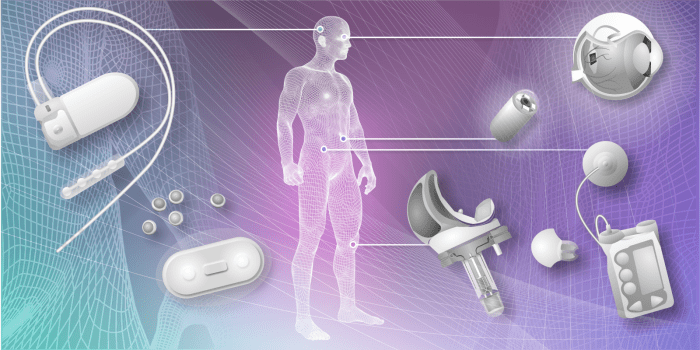
CMDC Labs can support appropriate design-verification activities through relevant laboratory
and analytical capabilities.
Depending on the product, this may involve:
- Analytical Testing
- Materials Testing
- Microbiological Testing
- Product Characterization
- Biological Evaluation
- Performance-Related Studies
- Comparative Testing
- Customized Laboratory Work
The project scope should be defined according to the organization’s requirements and intended
use of the resulting data.

Product Validation Support
Validation-related work may require scientific evidence demonstrating that products, processes,
or methods perform appropriately under defined conditions.
CMDC Labs can provide appropriate laboratory support for validation programs involving its
available scientific capabilities.
Project requirements should be reviewed before work begins, particularly when results are
intended for regulatory use.
Product Optimization & Improvement
Development Doesn’t End With the First Working Version
Scientific information can also help organizations improve existing products.
Development teams may want to:
- Improve product consistency
- Extend shelf life
- Evaluate alternative materials
- Compare suppliers
- Reduce contamination risk
- Investigate performance differences
- Improve formulations
- Understand degradation
- Characterize manufacturing changes
- Evaluate new ingredients
- Investigate customer feedback
Scientific testing can help compare alternatives and provide data for better-informed
development decisions.
When Development Becomes Troubleshooting
Product development is rarely perfectly linear.
A prototype may fail.
A formulation may become unstable.
A new supplier may change product performance.
A material may behave unexpectedly.
A manufacturing scale-up may introduce differences.
A shelf-life study may reveal degradation.
At that point, the development question becomes a troubleshooting question.
CMDC Lab’s Product Development and Scientific Troubleshooting capabilities are designed to
connect.
Rather than treating failure as separate from development, scientific investigation can help
generate information that informs the next product iteration.

Manufacturing Transition & Scale-Up Support
Understand What Changed When Production Changed
Products that perform successfully during early development can behave differently when
manufacturing conditions change.
Scale-up may introduce differences involving:
- Raw materials
- Suppliers
- Equipment
- Process conditions
- Environmental exposure
- Batch size
- Packaging
- Storage
- Product consistency
- Microbiological conditions
CMDC Labs can support appropriate comparative and investigative work when organizations
need to understand differences between development-stage and production-stage products.

Commercialization Readiness
Before commercialization, organizations may need to confirm that key scientific questions have
been adequately addressed.
Depending on the product and industry, considerations may include:
- Product characterization
- Stability
- Shelf life
- Materials
- Microbiology
- Contaminants
- Product consistency
- Analytical methods
- Verification
- Validation
- Manufacturing changes
- Quality requirements
- Applicable regulatory requirements
CMDC Labs can help evaluate appropriate scientific and laboratory needs as products move
toward commercialization.
Product Development Across Industries
CMDC Labs' multidisciplinary capabilities can support product-development questions across multiple sectors.
Medical Device & Biotechnology
Support may involve materials, surfaces, prototypes, biological response, microbiology,
analytical chemistry, characterization, verification, validation, and failure investigation.
Food & Beverage
Support may involve formulations, ingredients, microbiology, shelf life, stability, product quality,
contamination, manufacturing consistency, and product improvement.
Pharmaceutical & Life Sciences
Appropriate projects may involve analytical development, microbiology, characterization,
stability, methods, product development, and research support.
Agriculture, Dairy & Livestock
Scientific development may involve agricultural products, feed, water, ingredients, dairy
products, product quality, contaminants, and other production-related questions.
Environmental & Industrial Products
Projects may involve materials, chemicals, contaminants, water, manufacturing processes,
product characterization, and environmental performance.
Research & Innovation
Universities, startups, technology developers, and research teams may require scientific
capabilities for proof-of-concept work, product characterization, experimental studies, or
technology development.
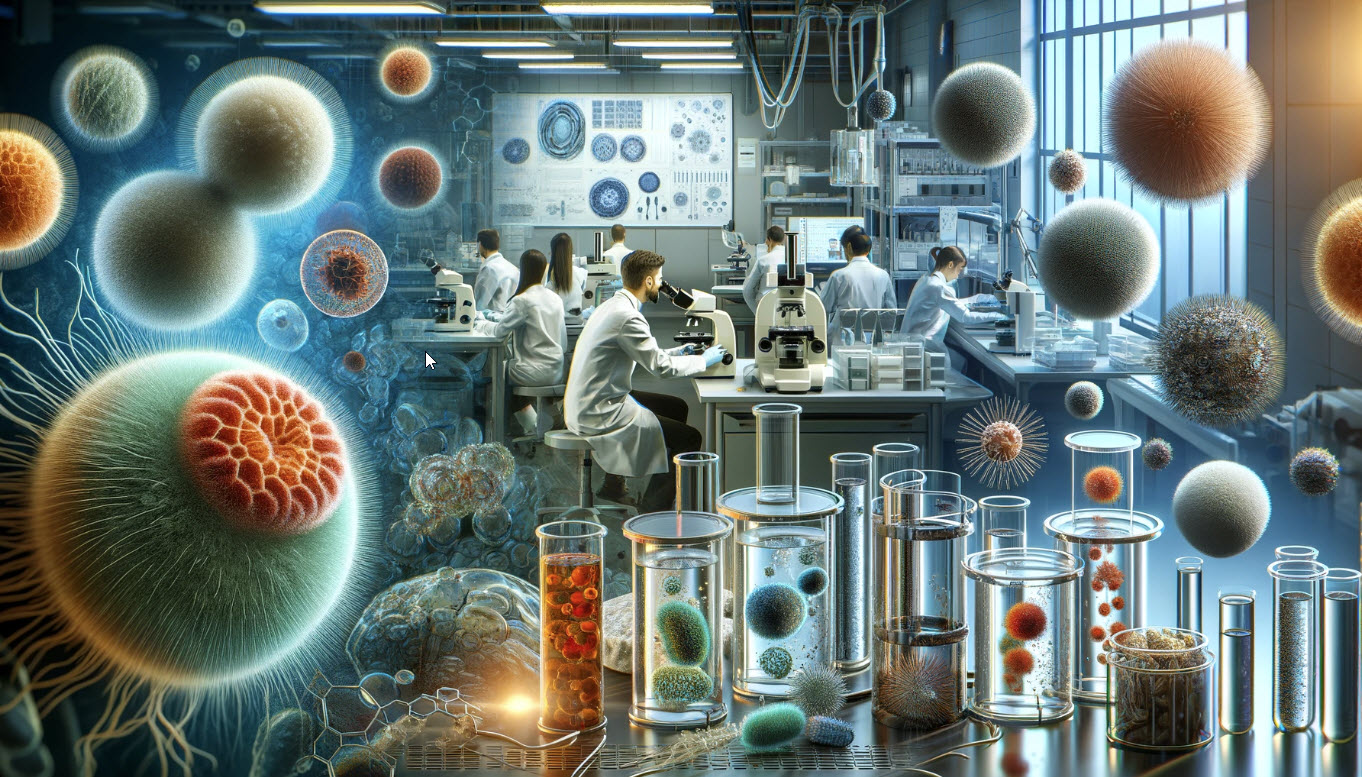
Multidisciplinary Capabilities for Product Development
Depending on the project, CMDC Labs can draw from capabilities across:
- Analytical Chemistry
- Microbiology
- Materials Science
- Food Sciences
- Medical Device Testing
- Water & Environmental Analysis
- Cell & Biological Response
- Sterility & Bioburden
- Product Characterization
- Stability & Shelf Life
- Method Development
- Method Validation
- Scientific Troubleshooting
- Research & Development
Advanced analytical technologies may include:
- HPLC
- LC-MS/MS
- GC / GC-MS
- ICP-MS
- FTIR
- Raman Spectroscopy
- SEM
- XPS
- Microbiological Methods
- Cell-Based Assays
- Materials & Surface Characterization
The appropriate capabilities are selected according to the development question.

How a Product Development Project Begins
How a Product Development Project Begins
Step 1 — Tell Us About the Product
Describe what you are developing, the current development stage, and what you need to understand.
Step 2 — Define the Scientific Objective
What decision should the scientific information help you make?
Examples might include:
- Select a material
- Compare prototypes
- Understand a formulation
- Evaluate stability
- Characterize a product
- Develop a method
- Investigate a failure
- Prepare for verification or validation
- Improve an existing product
Step 3 — Project Qualification
CMDC Labs evaluates whether the project fits our scientific capabilities and laboratory qualifications.
If results are intended for submission to or monitoring by a regulatory body, applicable requirements are evaluated during qualification.
Step 4 — Develop the Scientific Approach
The project may involve one test, multiple analytical techniques, consultation, comparative studies, product characterization, experimental work, or a broader development program.
Step 5 — Generate Scientific Information
The agreed laboratory or scientific work is performed according to the project scope.
Step 6 — Use the Findings to Inform Development
Results can help support the next product-development decision and may identify additional questions requiring evaluation.
What Should You Send Us?
Useful information can include:
- Product description
- Current development stage
- Product or prototype specifications
- Materials or ingredients
- Formulation information
- Previous testing
- Existing analytical methods
- Known problems or concerns
- Development objectives
- Comparison products or samples
- Intended market or application
- Project timeline
- Intended use of the resulting data
You do not need to have a complete development plan before contacting us.

Regulatory or Commercialization Project?
If the resulting laboratory data will be used for regulatory submission, regulatory monitoring, formal verification or validation, or another defined compliance purpose, tell us during qualification.
CMDC Labs will evaluate the applicable project requirements and whether the requested work falls within the appropriate laboratory capabilities and qualifications.
Customers do not need to determine the applicable laboratory accreditation or certification themselves.
Already Know Which Testing You Need?
If your development program already has clearly defined testing requirements, you can go directly to our laboratory services.
Need Help Determining the Development Approach?
You do not need to select every laboratory method before contacting us.
Tell us:
What are you developing?
Where are you in the development process?
What do you need to understand?
What decision are you trying to make?
Our scientific team can evaluate whether CMDC Labs has the appropriate capabilities to support the project.
Build With Better Scientific Information
Successful product development depends on asking the right scientific questions at the right time.
CMDC Labs combines multidisciplinary laboratory capabilities with scientific investigation, product-development experience, analytical expertise, and research support to help organizations better understand the products they are building.
From early feasibility through characterization, stability, verification and validation support, troubleshooting, improvement, and commercialization, scientific information can help development teams make better-informed decisions.